
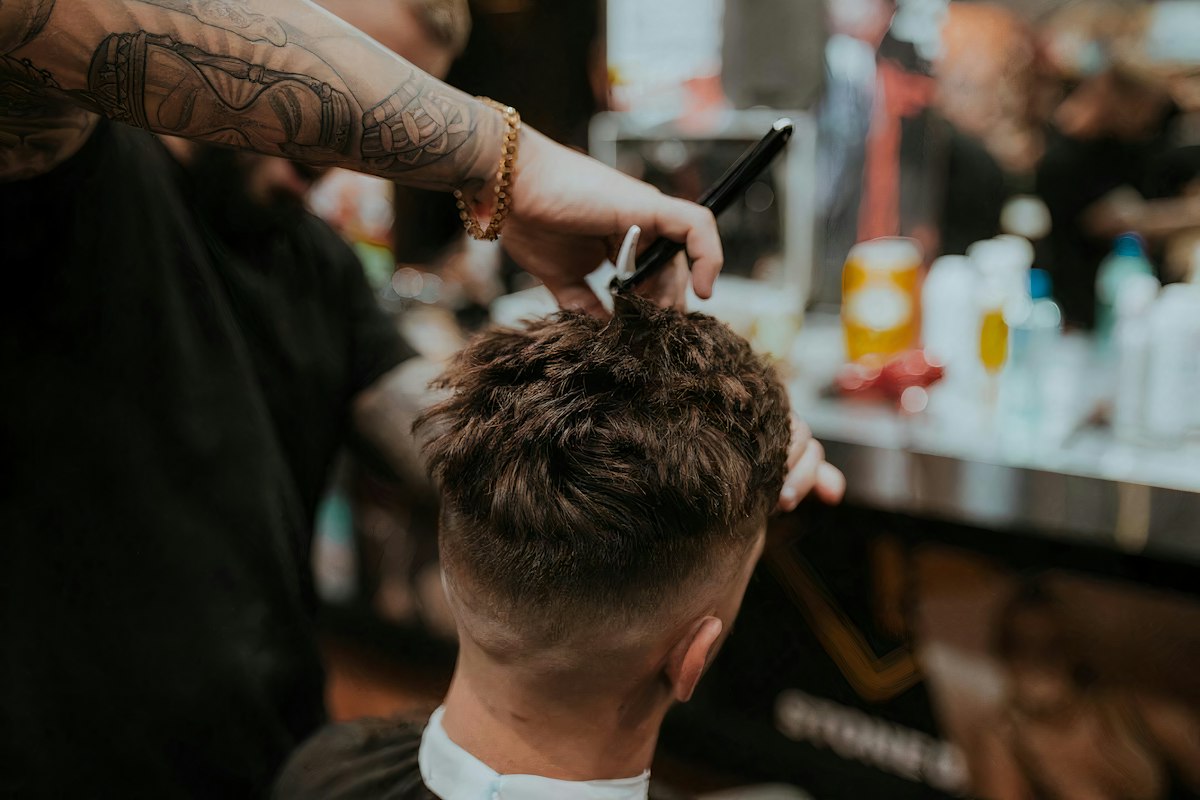
A profitable fully fitted barbershop has sold to an owner-operator buyer. The wider question: how do barbershops price differently from hair salons, and what does fully fitted actually mean for the deal?
Executive Summary
The key takeaway is that a profitable and fully fitted barbershop has been sold confidentially through BuyMySalon.co.uk following a controlled process, completing to an owner-operator buyer. Full trading details and sale terms remain confidential. Beyond the sale itself, this notice gives us the opportunity to answer a question we hear from many UK barbershop owners considering an exit: how does a barbershop actually price at sale compared with a hair salon, and what does the "fully fitted" description mean in practice for the eventual deal structure?
For a UK barbershop owner thinking about a sale within the next eighteen to twenty four months, this matters because barbershops trade on a different commercial basis from hair salons and attract a materially different buyer pool. Higher client throughput, lower average transaction value, walk-in-led booking patterns, employed and chair-rental team structures and specific fit-out requirements all shape the valuation. Owner-operator buyers dominate the segment, with barber-turned-owner buyers being the single largest group of purchasers across most UK barbershop transactions.
The working rule that emerges from transactions like the one just completed is that a well-prepared, profitable, fully fitted barbershop is a highly saleable asset that typically completes within a reasonable timeline to an owner-operator buyer, provided the pack answers the throughput, team structure and fit-out condition questions cleanly. In summary, barbershops are not simply small hair salons. They are a distinct segment with their own valuation drivers, their own buyer pool and their own preparation requirements. Owners who understand the distinction achieve materially better outcomes at exit.
Core Concept + Analogy
The primary rule here is that a profitable fully fitted barbershop is closest in commercial character to an independent coffee shop with a loyal regular customer base. The unit economics are driven by throughput rather than average transaction value, the fit-out and brand together carry meaningful weight in the valuation, and the buyer pool is dominated by operator-managers with sector experience who intend to work in the business themselves. Institutional and strategic buyers participate in the segment but rarely at the small-shop end.
Buyers of profitable fully fitted barbershops look for three specific elements that translate the operation into value. Clean evidence of trading throughput and revenue quality across the trailing twelve months. A team structure the buyer can plausibly maintain post-completion, whether employed, chair-rental or a mix. A fit-out that is genuinely complete, in good condition and requires no meaningful capital investment in the first eighteen months.
Throughput is the primary revenue driver
Barbershops produce revenue from client throughput rather than from high average transaction values. Buyers focus on average haircuts per barber per day, average revenue per operating hour, and utilisation across the trading week. Barbershops that can evidence strong throughput trade at healthy multiples of owner earnings. Barbershops that cannot evidence throughput trade at or below asset value.
Team structure shapes the buyer pool and the deal
Some barbershops operate on employed models, some on chair-rental, some on a mix. Each structure has implications for the buyer's cash flow, employment law exposure and operational control. Employed models transfer cleanly under TUPE and produce predictable cost structures. Chair-rental models require careful documentation of the rental agreements, HMRC status considerations for the individual barbers and clear terms on notice and transfer.
Fully fitted means capital-ready, not just decorated
The phrase "fully fitted" carries specific commercial weight. It means the buyer inherits a business ready to trade from day one without meaningful capital investment: chairs, backwashes, till and booking system, retail display, signage and any specialist equipment all present and in working order. Buyers verify condition during due diligence and any material shortfalls typically trigger price adjustments.
Action Blueprint + Case Study
In summary, a UK barbershop owner planning to sell within the next eighteen to twenty four months should work through a six step preparation sequence that answers the specific barbershop questions directly.
Step 1 — Reconcile the trailing twelve months P&L to bank statements. Sales, cost of sales, wage or chair-rental income, rent, other overheads and normalised owner earnings. Cash trading in the segment requires particular discipline in the reconciliation.
Step 2 — Prepare the throughput dataset. Average haircuts per barber per day, average revenue per operating hour, and utilisation across the trading week, from the till or booking system. This is the primary evidence buyers focus on.
Step 3 — Document the team structure. Employment contracts for employed team members, chair-rental agreements and HMRC status evidence for self-employed barbers, and clear terms on notice and transfer. Address any employment law or status ambiguities before launch.
Step 4 — Prepare the fit-out condition assessment. Age and condition of chairs, backwashes, till and booking system, retail display, signage and specialist equipment, with any items approaching replacement clearly flagged.
Step 5 — Address the cash trading question directly. Where a meaningful proportion of revenue is cash, evidence banking discipline, till reconciliation and, where relevant, cash handling procedures. Buyers price cash trading conservatively unless the discipline is evidenced.
Step 6 — Target the specific owner-operator buyer pool. Working with the specialist broker, focus on barber-turned-owner buyers with sector experience, existing single-shop owners looking to add a second site and, occasionally, small local groups building regional presence.
Case study: the barbershop that has just sold
The profitable fully fitted barbershop whose sale is confirmed by this notice illustrated the blueprint clearly. The trailing twelve months P&L was reconciled to bank statements before launch, with cash trading elements evidenced through till reconciliation and banking discipline. Throughput was strong and evidenced from the till and booking system, with utilisation across the trading week supporting the headline revenue.
The team structure combined employed barbers and chair-rental arrangements, with clean employment contracts and properly documented chair-rental agreements including HMRC status evidence. The fit-out condition assessment was prepared before launch, with no material items approaching replacement in the first eighteen months post-completion. The specialist broker reached the owner-operator buyer pool and the eventual buyer was a barber with sector experience taking a first step into ownership. Details are withheld to preserve confidentiality. The relevant takeaway for other barbershop owners is that the preparation work above materially shaped both the buyer pool reached and the certainty of completion.
Valuation Impact
The primary rule here is that a well-prepared profitable fully fitted barbershop typically trades at a healthy multiple of normalised owner earnings, in a band appropriate to the barbershop segment. A poorly prepared barbershop that cannot evidence throughput, team structure or fit-out condition typically trades at or below asset value because buyers cannot justify a business multiple in the absence of clean evidence.
Owner-operator affordability is the primary factor in whether the sale actually completes at the expected multiple. Barbershop transactions are typically financed through a combination of buyer savings, family support and, sometimes, a commercial loan or seller financing element. A sale structure that a typical owner-operator can finance produces completion at close to the asking level. A structure that stretches typical affordability produces either no completion or completion at a materially reduced level.
Cash trading is the most common structural drag in the segment. Where cash trading is meaningful and banking discipline is not evidenced, buyers discount the revenue that cannot be verified. Where cash trading is minimal or fully evidenced, there is no material drag. Sellers who address the cash question proactively in the twelve months before launch protect the multiple.
BuyMySalon.co.uk has completed a wide range of barbershop transactions across the UK. Investment readiness in the barbershop segment is inseparable from disciplined joint preparation of P&L reconciliation, throughput evidence, team structure documentation and fit-out condition, and the four are best treated as a single workstream from twelve months before launch.
FAQ Ecosystem
How does a barbershop price compared with a hair salon?
The key takeaway is that barbershops price on their own segment basis, reflecting higher throughput, lower average transaction value and a different buyer pool. Direct comparison with hair salon multiples is misleading. A well-prepared barbershop trades at a healthy segment multiple; a poorly prepared one trades at or below asset value.
What does fully fitted mean in practice?
The buyer inherits a business ready to trade from day one without meaningful capital investment: chairs, backwashes, till and booking system, retail display, signage and specialist equipment all present and in working order. Buyers verify condition during due diligence and any material shortfalls typically trigger price adjustments.
Who typically buys a barbershop?
Barber-turned-owner buyers with sector experience taking a first step into ownership, existing single-shop owners looking to add a second site, and occasionally small local groups building regional presence. Owner-operator buyers dominate the segment across most UK barbershop transactions.
How is chair-rental handled in the sale?
Chair-rental agreements need to be properly documented, with HMRC status evidence supporting the self-employed treatment of the individual barbers and clear terms on notice and transfer. Ambiguous chair-rental arrangements typically trigger deal delays and price adjustments during due diligence.
Does cash trading affect the valuation?
Yes, where cash trading is meaningful and banking discipline is not evidenced. Buyers discount revenue that cannot be verified. Where cash trading is minimal or fully evidenced through till reconciliation and banking discipline, there is no material drag on the valuation.
How long does a barbershop sale typically take?
Typically three to six months from launch to completion for a well-prepared profitable business, driven largely by the buyer's financing timetable. Owner-operator financing typically completes faster than commercial mortgage financing, and cash buyers occasionally complete within eight to ten weeks.
What is the typical financing structure?
A combination of buyer savings, family support and, sometimes, a commercial loan or seller financing element. Sale structures that a typical owner-operator can finance produce completion at close to the asking level. Structures that stretch typical affordability produce either no completion or completion at a materially reduced level.
How important is the location for a barbershop valuation?
Important but secondary to throughput. A strong location with weak throughput trades at asset value. A less prominent location with strong throughput trades at a healthy business multiple. Buyers pay attention to location as one of several factors but do not pay a premium for location alone.
Your next step
In summary, this sale has closed. For UK barbershop owners thinking about the next eighteen to twenty four months, the useful next step is a confidential conversation with BuyMySalon.co.uk about how your throughput, team structure and fit-out condition will price at exit, what the specific preparation window looks like for your business, and how to reach the owner-operator buyer pool through a properly controlled process. It is free of charge, free of obligation and designed to leave you with a much clearer view of the value already sitting inside your shop.
Find out what your business is worth.
No obligation. Your business is never named or listed without your written consent.